
Medical team
Hair Transplant Clinical Team

An individual plan for a previous transplant, built around the existing grafts, scars and remaining donor supply.
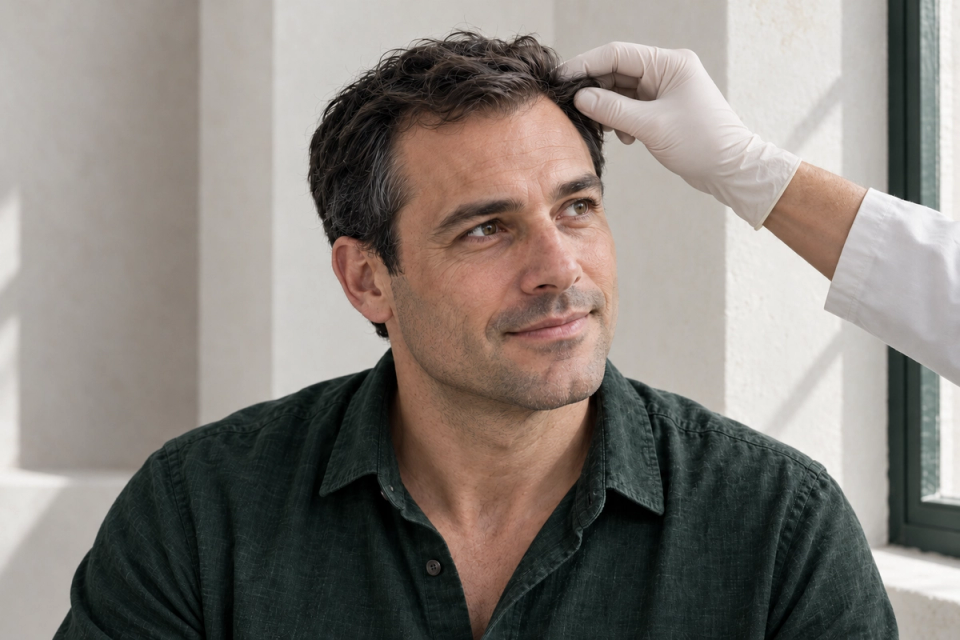
Transplant correction addresses concerns left by an earlier hair transplant, such as an unnatural hairline, unsuitable graft direction, uneven density or visible donor changes. Depending on the assessment, the plan may involve removing selected grafts, redistributing them or adding carefully placed follicles to soften and rebalance the result.
Hair Transplant Clinical Team

Patient Aftercare Team
Assessment
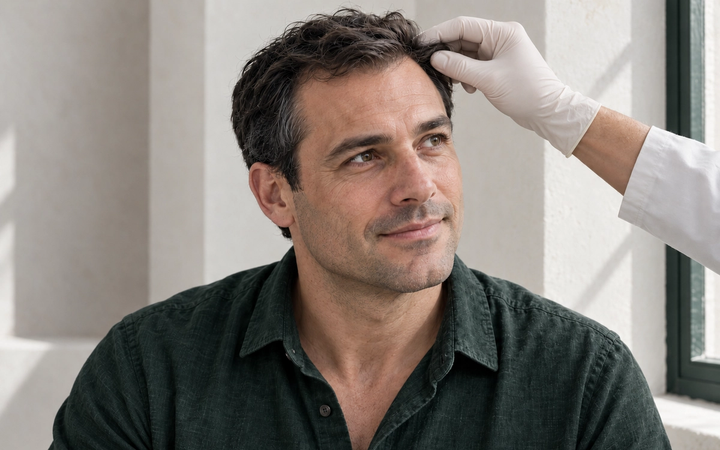
We examine the previous work, scalp, donor reserve and pattern of ongoing hair loss.
Correction strategy
We explain what can be removed, redistributed, softened or rebuilt and agree realistic priorities.
Your procedure
The selected correction is carried out with attention to hairline design, direction and donor preservation.
Review & follow-up
We monitor healing and growth and decide whether any staged work is appropriate.
A good decision starts with clear information. We're here to answer your questions and help you feel confident about the next step.
A correction plan may address an unnatural or low hairline, unsuitable graft angles, uneven density, older plug-like grafts or visible changes in the donor area. What is possible depends on the scalp, scarring and remaining donor supply.
Options may include removing selected misplaced grafts, redistributing suitable follicles, adding single-hair grafts to soften a hairline or using a combination of approaches. The method is chosen only after examination.
Not always. Existing scarring, skin changes and limited donor hair can restrict the available options. The aim is to identify realistic improvements and preserve future donor choices rather than promise a perfect result.
Some corrections can be completed in one procedure, while others are safer or more predictable when staged. The number and spacing of procedures depend on the correction required and how the scalp heals.
Removal-based changes may be visible earlier as the area heals. If new grafts are placed, they often shed first and begin new growth around 3–4 months, with the result developing over the following months.
Tell us what you would like to change. We will help you explore the next step.