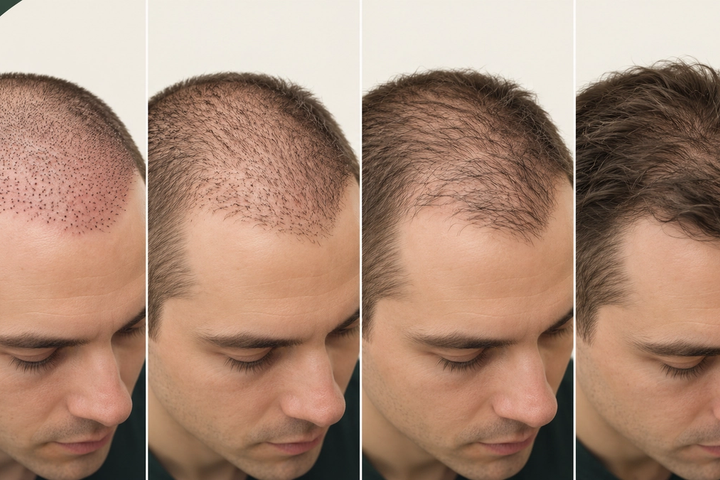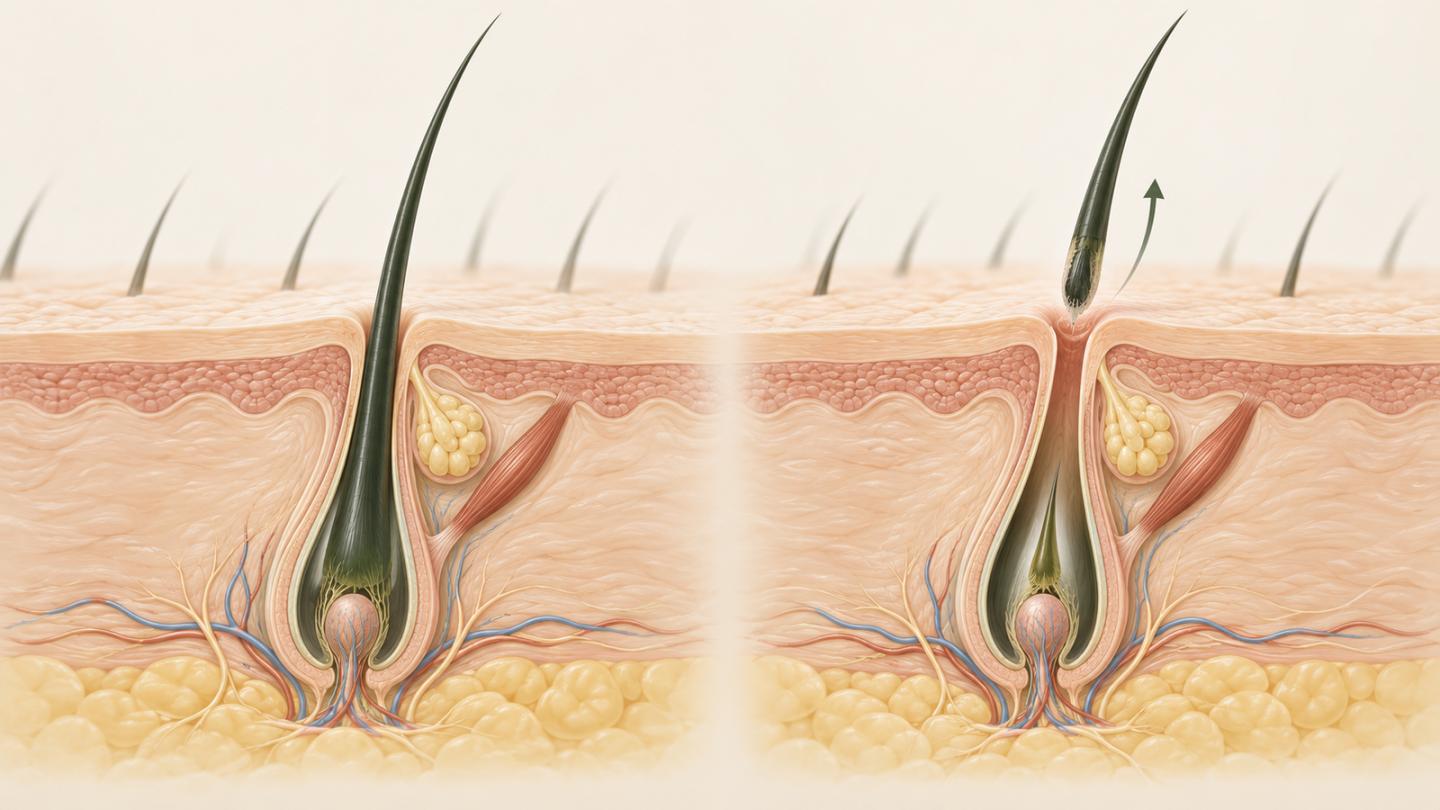
The weeks after a hair transplant can be emotionally difficult because the short hairs visible after surgery may fall out. This expected shedding is often confused with graft loss. The shaft can shed while the follicle remains in the skin and later begins another growth cycle. The NHS notes that transplanted hair commonly falls out after a few weeks before new hair appears.
“Shock loss” is a broader informal term used for temporary shedding of existing hair after physical stress to the scalp. Timing and extent vary, and photographs alone cannot determine whether every change is temporary. Your treating clinic should interpret it in the context of diagnosis, miniaturisation and the surgical plan.
Transplanted-hair shedding
A graft contains the follicular structure beneath the surface and a visible hair shaft. The shaft may detach as the follicle transitions through its cycle. That does not mean a whole graft has fallen out. Early accidental graft displacement is a different event and is most relevant while grafts are still vulnerable, which is why rubbing and picking must be avoided during the initial period.
Shock loss in the recipient area
Existing hairs around the implanted region can shed after surgical stress. Miniaturised hairs may be more vulnerable and may not all recover in the same way. This possibility should be discussed before operating between native hairs. A long-term plan considers ongoing pattern loss rather than assuming transplantation protects every surrounding hair.
Donor-area shedding
Temporary thinning can also appear around the harvested donor region. Extraction density, tissue response and individual healing may contribute. Patchy appearance should be photographed in consistent light and reviewed by the clinic. Overharvesting, inflammation and temporary shedding are not the same problem, so avoid diagnosing the cause from social-media photographs.
A typical sequence
- First days: short transplanted hairs remain visible among redness and crusts.
- Following weeks: crusts clear and many transplanted shafts may shed.
- Early months: the scalp can look quiet before uneven new growth appears.
- Later months: more hairs emerge and gradually gain length and calibre.
These are broad phases, not deadlines. Review the full hair transplant recovery timeline and compare progress at agreed intervals instead of day by day.
Signs that need a conversation with the clinic
Contact the clinic if shedding is accompanied by increasing pain, warmth, spreading redness, pus, fever, persistent heavy crusting or another change identified in your discharge instructions. Sudden shedding elsewhere on the scalp or body also deserves medical assessment because causes unrelated to surgery may be present.
Can shedding be prevented?
No routine can guarantee that temporary shedding will not happen. Follow the prescribed washing and medication plan, avoid trauma and do not add supplements or topical products without approval. If a clinic recommends medical hair-loss treatment, discuss benefits, risks and continuity with a qualified prescriber rather than starting or stopping it around surgery on your own.
How planning reduces avoidable risk
A careful plan maps miniaturised native hair, controls recipient-site placement and avoids forcing excessive density into vulnerable tissue. It also protects the donor area through distributed harvesting. This is why graft and donor planning and an honest pre-surgery consultation matter as much as aftercare.
How to monitor progress without panic
Take photographs on the schedule requested by your clinic, using the same room, distance, angle, hairstyle and dry or wet condition. Record symptoms as well as appearance. Constant close-up inspection makes normal variation look dramatic. A series of comparable images gives the clinical team more useful evidence.
If you are considering surgery, read the hair transplant pathway and request written aftercare before booking. If you already had surgery and are worried, contact your treating team; an educational article cannot assess a healing scalp.
Sources and further reading
See NHS — hair transplant recovery, American Academy of Dermatology — hair transplantation, and Hair Transplantation: State of the Art.
Frequently asked questions
Does shedding mean my hair transplant failed?
Not by itself. The visible transplanted shafts commonly shed while follicles remain beneath the skin. Failure cannot be judged from early shedding alone.
When does shock loss grow back?
Temporary shedding may recover over subsequent months, but timing and the likelihood of recovery depend on the affected hairs and underlying diagnosis. Your clinic should review persistent or extensive loss.
Can I pull off crusts to reduce shedding?
Do not pick or force crusts. Follow the clinic’s washing schedule so they soften and clear safely. Forceful removal can irritate healing skin and, early on, may endanger grafts.