A beard transplant relocates suitable hair follicles—commonly from the scalp—to selected facial areas. The goal may be to strengthen a moustache, connect the beard, fill a scar or improve patchy coverage. Because facial hair shape and direction vary sharply across small distances, design and placement control are central.
The peer-reviewed review of beard hair transplantation discusses facial zones and technical considerations. An assessment must also consider why beard hair is sparse. Stable genetic density, scarring, inflammatory disease and alopecia areata do not share the same surgical pathway.
Who may be considered?
A potential candidate needs a suitable diagnosis, adequate donor hair, realistic expectations and healthy recipient skin. The clinician should review the pattern and duration of facial hair loss, medical history, previous scars and any active skin symptoms. Surgery may be postponed or avoided when the cause is active, unclear or better managed medically.
Design follows facial anatomy
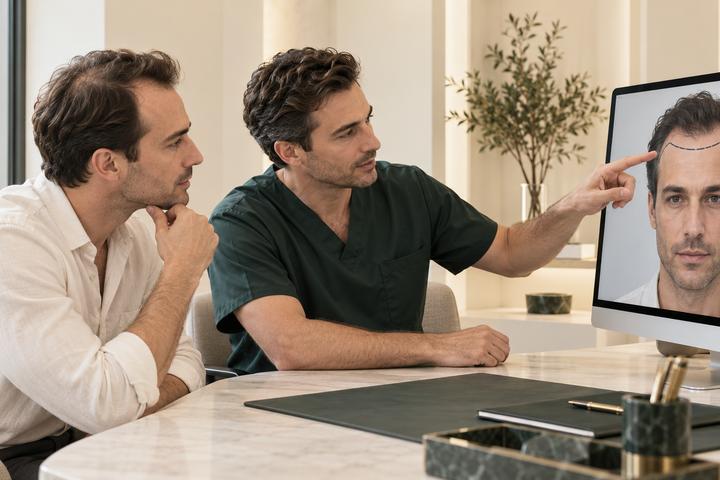
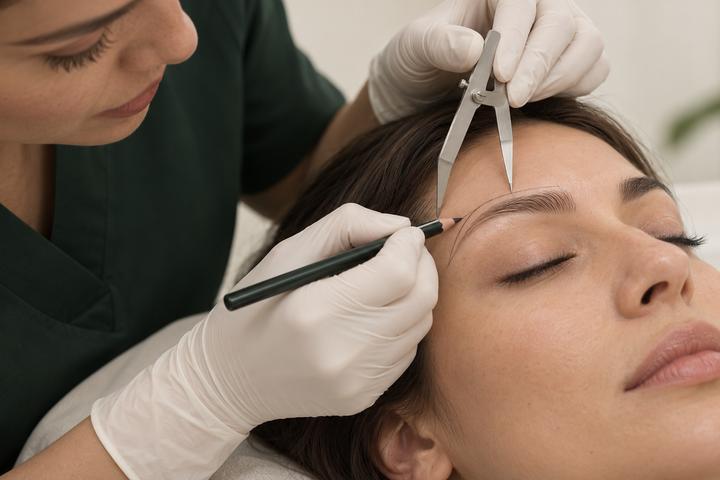
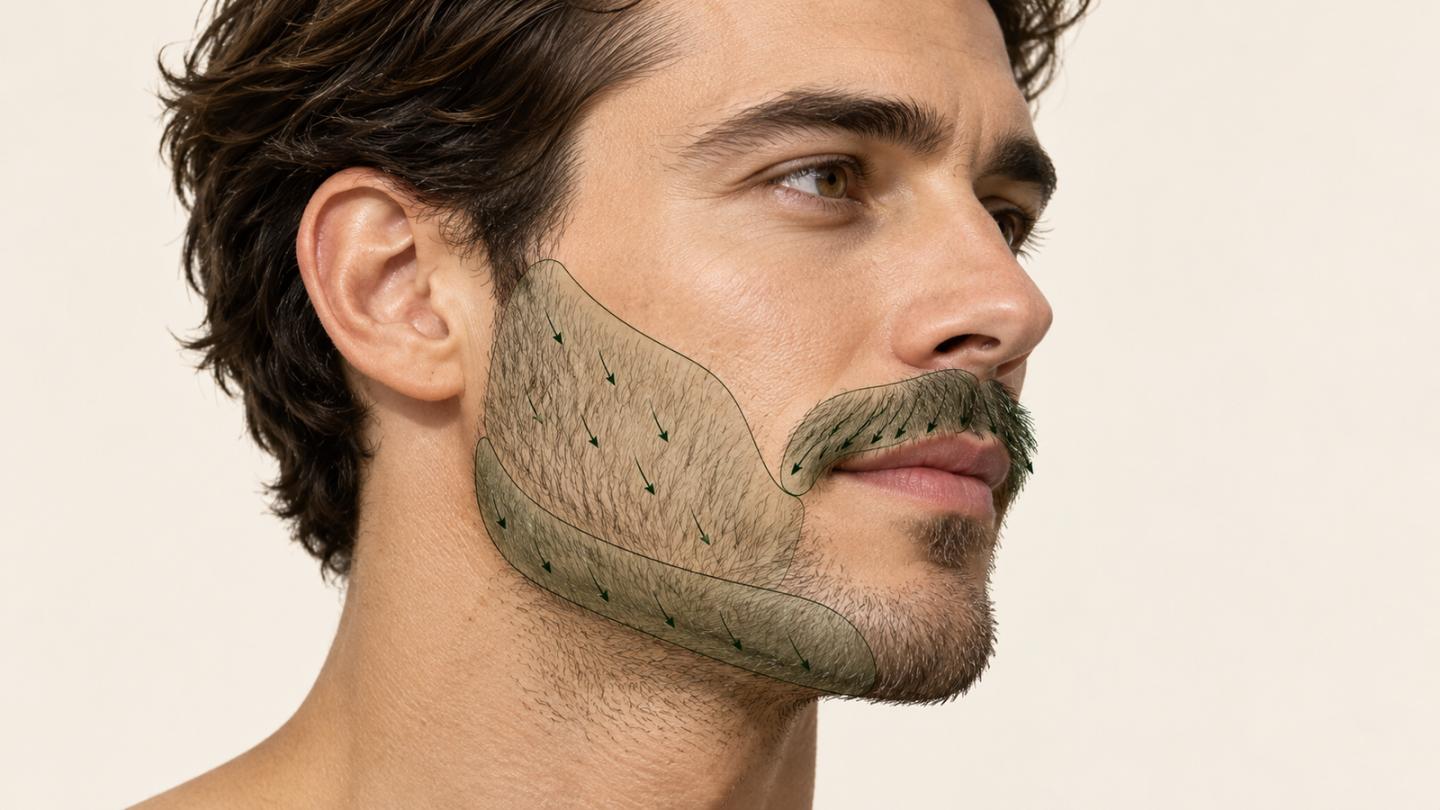
Cheek height, sideburn transition, moustache shape, jaw width and natural asymmetry should be discussed while the patient is upright. A beard drawn as a solid geometric block may look unnatural when shaved short. The plan should show the intended boundary and the internal distribution rather than only an outline.
Donor hair must be matched thoughtfully
Scalp donor hair may differ from facial hair in calibre, curl, colour and growth rate. Those differences do not disappear after transplantation. The team should explain which donor zones are being considered and how follicles will be selected and distributed. Donor planning also has to preserve options for current or future scalp hair loss.
Angle and direction are critical
Natural beard hair often lies close to the skin and changes direction across the cheek, jaw, chin and moustache. Recipient placement must follow those transitions. Hairs that emerge too upright can be conspicuous, especially when trimmed short. Ask who controls recipient-site direction and how the design will be checked before implantation.
How many grafts are needed?
The number depends on the area, existing facial hair, desired outline, donor characteristics and visual-density goal. A small scar and a full-beard design are completely different projects. Treat remote figures as estimates until facial and donor measurements are taken. The principles in our graft-planning guide still apply.
Early recovery
Small crusts and redness can form around implanted follicles, and swelling or tenderness may occur. Follow the clinic’s instructions for washing, sleeping, shaving, skincare and activity. Do not pick crusts or use fragranced products without approval. Increasing pain, heat, discharge, fever or rapidly worsening redness requires prompt advice.
Shedding and growth
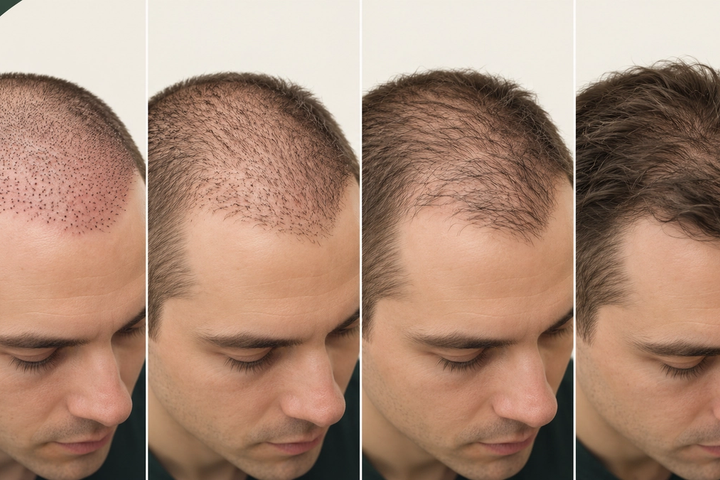
The visible implanted hair shafts may shed during the early weeks before new growth develops over subsequent months. Growth can be uneven initially, and transplanted scalp hairs may require regular trimming because their growth behaviour remains closer to the donor source. Final assessment takes time; early patchiness is not a reliable endpoint.
Questions for your consultation
- What diagnosis explains my patchy or absent beard growth?
- How will the design look both clean-shaven and at my preferred length?
- Which donor hair best matches each facial zone?
- Who controls angle, direction and follicular-unit selection?
- How will scalp donor needs be protected for the future?
A decision that should remain reversible in appearance
A beard transplant creates permanent follicle placement, so fashion alone should not determine a very high cheek line or dense outline. Discuss how the design will age and how it will look if you later prefer shorter facial hair. Review the beard restoration service and the consultation checklist before committing.
For an individual assessment, send clear front, profile, under-chin and donor photographs through the consultation form. A remote review is preliminary and cannot diagnose skin disease.
Sources and further reading
See Beard Hair Transplantation — peer-reviewed review, Follicular unit extraction — review, and American Academy of Dermatology — hair transplant candidacy.
Frequently asked questions
Does transplanted beard hair grow like normal beard hair?
It can grow permanently when follicles establish, but scalp donor hair may retain differences in growth rate, texture or calibre and may need regular trimming.
Can a beard transplant treat alopecia areata?
Active or uncertain patchy hair loss requires medical diagnosis first. Transplantation is not automatically appropriate and may be avoided when the underlying condition is active.
When can I shave after a beard transplant?
Follow the treating clinic’s specific schedule because early friction can disturb healing skin. Do not shave or pick the area until the team confirms it is appropriate.