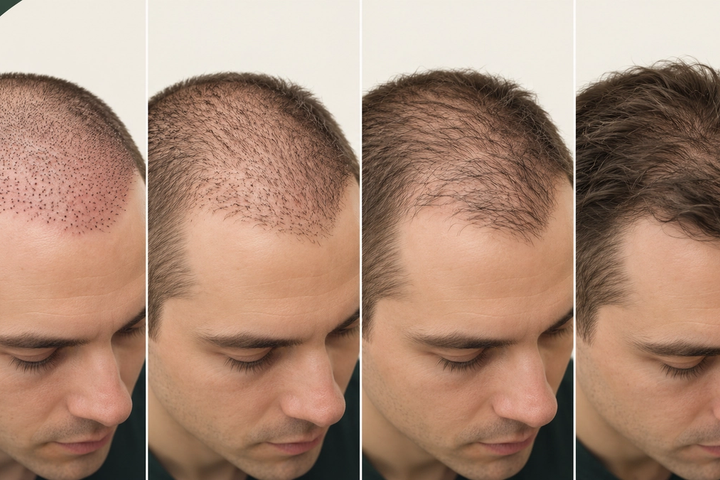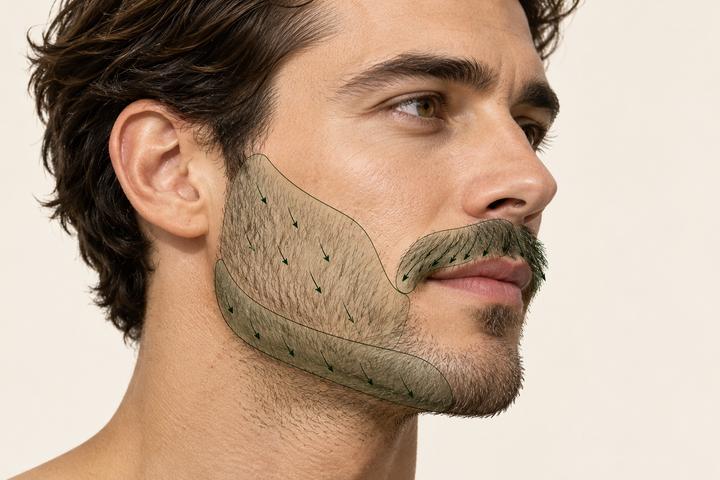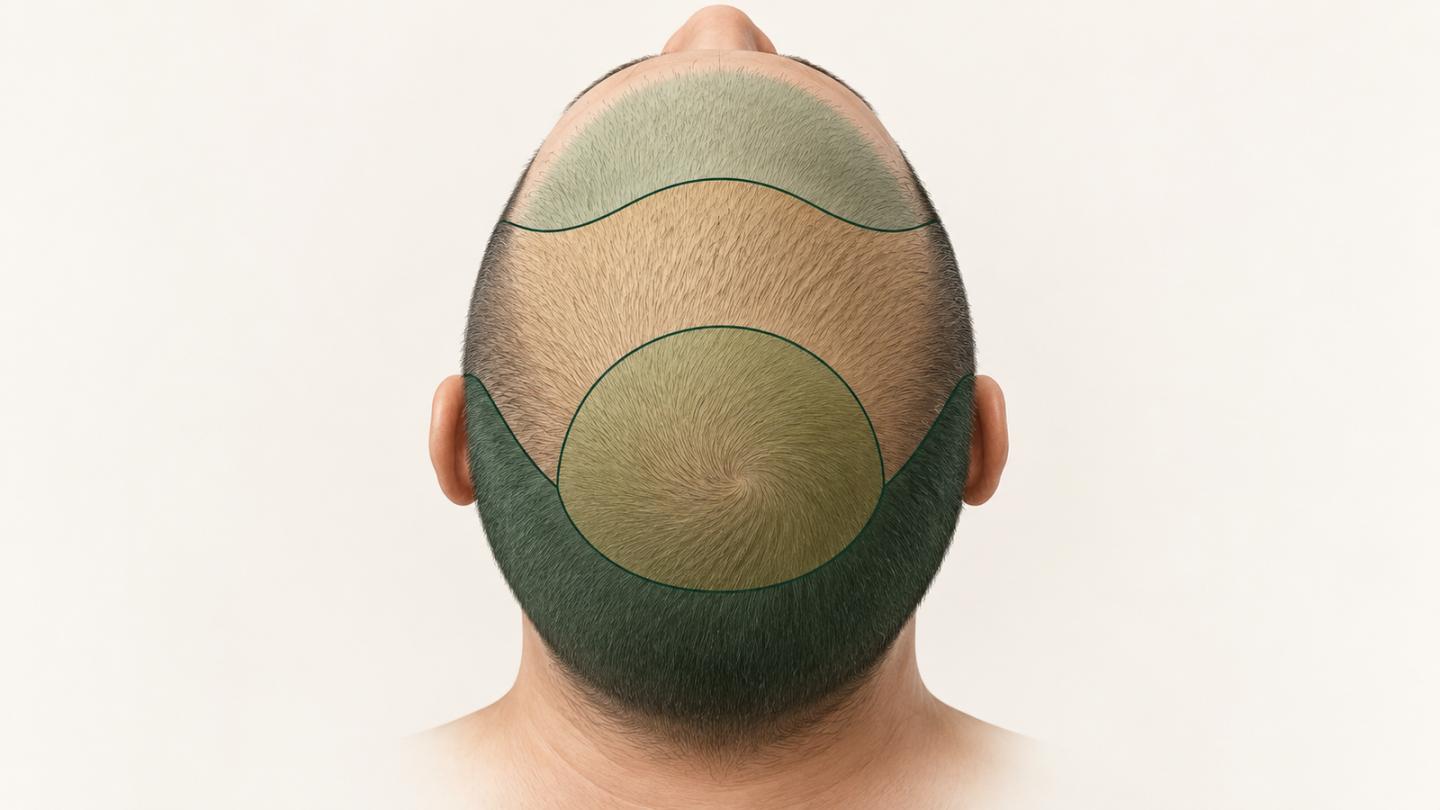
Online graft calculators can be useful for vocabulary, but they cannot measure your donor area or predict how a design will look on your head. Two people with a similar pattern can require different plans because head size, hair calibre, curl, colour contrast, donor density and existing miniaturised hair all change the visual result.
The American Academy of Dermatology describes adequate healthy donor hair as a central requirement for transplantation. The goal is therefore not to collect the largest possible number. It is to use a finite donor supply where it creates the most durable benefit.
Grafts are not the same as hairs
A follicular unit, commonly called a graft, may contain one, two, three or more hairs. Hairlines often use carefully selected single-hair units for a softer edge, while multi-hair units may add visual mass behind it. A quote that switches between “hairs” and “grafts” can sound larger than it is, so ask which unit is being counted and how the count will be documented.
Start with the area, not a package
The team should map the zones being considered: frontal hairline, forelock, mid-scalp, crown or a combination. Surface area and intended distribution matter. Treating every zone at once may spread limited grafts too thinly. In some cases, prioritising the frontal frame provides a stronger visual change while preserving options for later progression.
Donor density and safe distribution
The donor region is not uniform. Density, follicular-unit composition and hair diameter vary across it. Extraction must be distributed so the area still looks balanced at the patient’s preferred hair length. FUE can leave small round extraction sites, and excessive or uneven harvesting may make them more visible. The FUE review explains the extraction method and its considerations.
Hair characteristics change visual coverage
Thicker or curlier hair may create more apparent coverage per graft than fine, straight hair. A lower contrast between hair and scalp can also help the result appear fuller. These are visual effects, not reasons to inflate a guarantee. Ask how your own hair characteristics influenced the estimate and request comparable examples rather than only dramatic best cases.
Future loss belongs in today’s calculation
Transplanted follicles may be more resistant to pattern loss, but untreated native hair can continue to thin. A plan should reserve donor capacity and place the hairline where it can remain coherent if loss advances. Age alone does not decide this; stability, family history, diagnosis and medical management all contribute. Read how a natural hairline is planned for the design side of the calculation.
Why estimates change on the day
An initial range may change after close examination, trimming or actual extraction. The team may discover a different average number of hairs per graft, areas that should not be harvested, or recipient tissue considerations. Ask in advance who can approve a change, how it will be documented and whether the cosmetic priorities will be adjusted if fewer grafts are advisable.
Questions to ask about your estimate
- What recipient area was measured, and which zones have priority?
- What donor density and hair-calibre findings support the range?
- How many grafts are expected to be singles versus multi-hair units?
- What reserve remains if hair loss continues?
- How will the extracted and implanted counts be recorded?
What an online photo review can and cannot do
Clear photographs can show the pattern, approximate scale and styling goals. They cannot reliably show scalp disease, miniaturisation, donor density or tissue quality. Treat a remote figure as a preliminary range. The consultation checklist will help you turn that range into a defensible plan.
A case-specific assessment connects the number to design, technique and long-term care. Explore the hair transplant service and send your history and photographs when you are ready. No online guide can prescribe a graft count for an individual.
Sources and further reading
See American Academy of Dermatology — hair transplant candidacy, Follicular unit extraction — review, and Hair Transplantation: State of the Art.
Frequently asked questions
Is 3,000 grafts enough for a hair transplant?
It may be too many, too few or appropriate depending on the measured area, donor supply, hair characteristics and priorities. The number has no reliable meaning without those details.
Can removed donor grafts grow back?
Follicular units removed for transplantation are relocated rather than regenerated in the extraction sites. That is why donor harvesting must be conservative and evenly planned.
Why did two clinics give different graft estimates?
They may be using different target areas, density assumptions, units or donor strategies. Ask each clinic to show the measured zones and explain what would be prioritised if the available supply is lower.