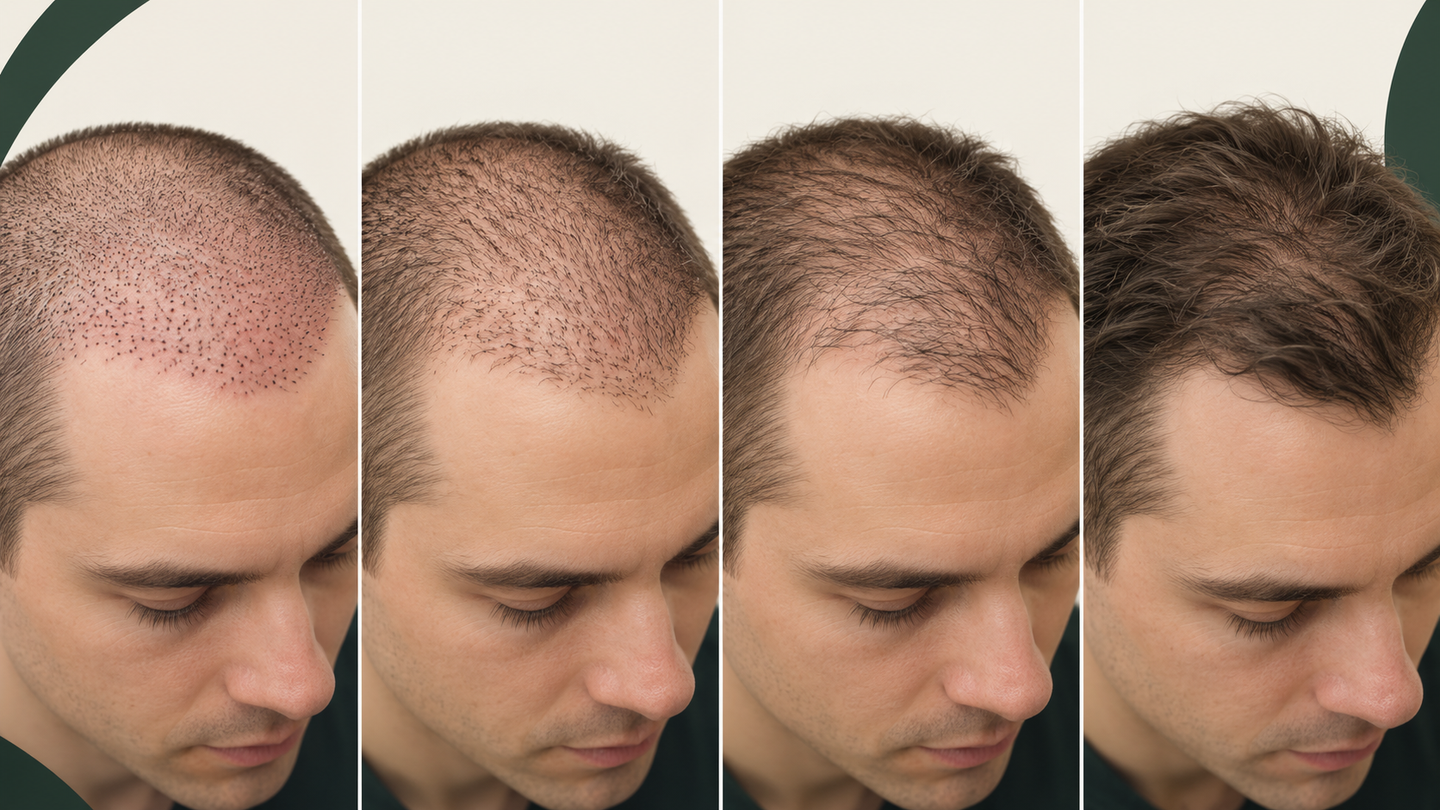
Hair transplant recovery has two timelines. The skin heals over days and weeks, while transplanted follicles may take months to produce visible hair. Understanding that difference prevents normal shedding from being mistaken for failure. Exact timing varies with the procedure, treated area, skin response and the instructions given by your clinical team.
The NHS patient overview explains that the grafts are not secure during the first two weeks, that transplanted hair often falls out after several weeks and that new hair later grows. Use this guide for planning, but follow your own clinic’s washing, medication and activity instructions.
The first 24 hours
The recipient area may look red with small points around each graft. The donor area can feel tight, tender or numb. Mild oozing may occur early. Protect the grafts from rubbing and accidental contact, take only the medicines advised by your clinician and keep the contact number accessible. Your sleeping position and first wash should follow the written protocol you received.
Days 2–4: swelling and careful routines
Some patients develop forehead swelling that can move downward before settling. Crusting begins around the grafts, and the donor area starts closing. Avoid picking, scratching and unapproved products. If swelling is severe, one-sided, painful or accompanied by breathing difficulty, fever or rapidly worsening symptoms, seek prompt clinical advice rather than relying on an online timeline.
Days 5–10: crusts begin to clear
Gentle washing usually becomes easier according to the clinic’s schedule. Crusts should be allowed to soften and release without force. Redness can remain longer in some skin tones and individuals. Many people can return to non-physical work during this period, but appearance and comfort vary. Ask before wearing tight headwear or resuming anything that presses on the recipient area.
Weeks 2–6: shedding can look alarming
The short transplanted hair shafts commonly shed while the follicles remain beneath the skin. Native hairs near the treated region may also temporarily shed after surgical stress. This phase is discussed in more detail in our guide to shedding and shock loss. Photographs taken in consistent lighting are more useful than daily mirror checks.
Months 2–4: the quiet phase and early growth
The scalp may look healed before meaningful growth is visible. Fine, uneven new hairs can begin to appear, but the pace differs across the scalp. Avoid judging density at this stage. Continue any approved hair-loss management plan and attend scheduled reviews. Contact the clinic if you develop persistent inflammation, discharge, increasing pain or another unexpected change.
Months 5–8: visible development
More hairs may emerge and existing new hairs can gain length and calibre. Different zones may mature at different rates. Styling can make progress easier to see, yet comparisons should use similar hair length, angle and light. A lower hairline is not automatically a denser-looking result; design, hair characteristics and distribution all contribute.
Months 9–12 and beyond
Many results become easier to assess around a year, while maturation can continue beyond that in some areas and individuals. The final review should consider the recipient appearance, donor condition, continued native hair loss and whether expectations were met. Do not plan an additional procedure simply because early growth seemed slow; wait for a clinician to assess maturity.
What usually deserves urgent advice?
- Bleeding that does not settle with the clinic’s recommended measures.
- Rapidly worsening pain, heat, pus, fever or spreading redness.
- Sudden marked swelling with eye symptoms, breathing difficulty or allergic features.
- Any symptom your discharge instructions identify as urgent.
Planning work, travel and follow-up
Build flexibility into your schedule, especially if your work is physical or public-facing. If you are travelling internationally, keep aftercare products in permitted luggage, know how to contact the clinic and arrange photo reviews. Our guide to flying after a hair transplant covers travel planning, while the consultation checklist helps you secure aftercare details before treatment.
A personalised plan begins with an assessment of your scalp, donor area and health history. You can review the hair transplant pathway or request a consultation. This information is educational and is not a diagnosis or emergency service.
Sources and further reading
Read NHS — hair transplant recovery and complications, American Academy of Dermatology — transplantation and candidacy, and Hair Transplantation: State of the Art.
Frequently asked questions
When do transplanted hairs start to grow?
Early visible hairs may appear after several months, but growth is uneven and maturation takes longer. Your clinician should assess progress across a series of consistent photographs rather than one fixed date.
Is shedding after a hair transplant normal?
Shedding of the transplanted hair shafts is common in the first weeks. The follicle may remain beneath the skin. Contact your clinic if shedding comes with worsening pain, discharge or unusual inflammation.
When can I judge the final result?
A meaningful assessment often requires around a year, and some areas may continue maturing beyond that. Timing varies, so use the review schedule provided by your treating team.