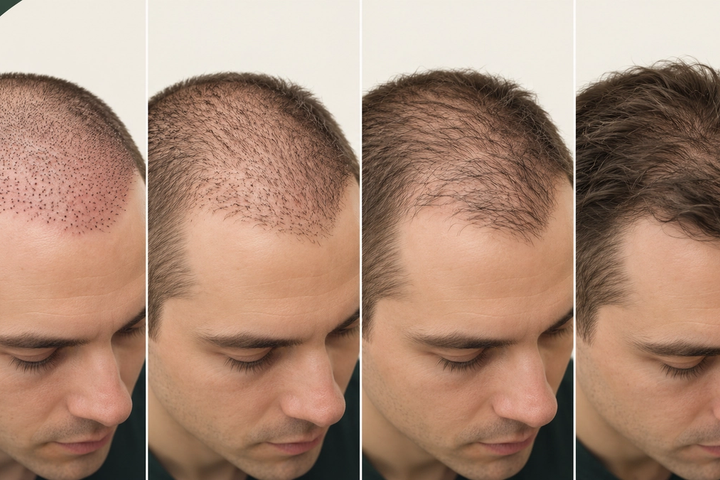
An unsatisfactory hair transplant can mean different things: a low or straight hairline, visible multi-hair plugs, wrong direction, poor density, wide scars, patchy extraction or continued loss behind the transplanted zone. Each problem needs a different response. “Add more grafts” is not a diagnosis and can worsen a depleted donor area.
Repair planning has a long clinical history; the peer-reviewed article on correction of older cornrow and common transplant problems describes several corrective concepts. Modern techniques expand the options, but the central principle remains: identify the defect, assess available tissue and set realistic priorities.
Wait until the result is mature
Early redness, shedding and uneven growth are not final results. Unless there is an urgent complication, cosmetic judgement usually needs sufficient time for growth and tissue maturation. Ask the original clinic for records and scheduled reviews. The recovery timeline explains why a result that looks sparse in early months may still be developing.
Define the problem precisely
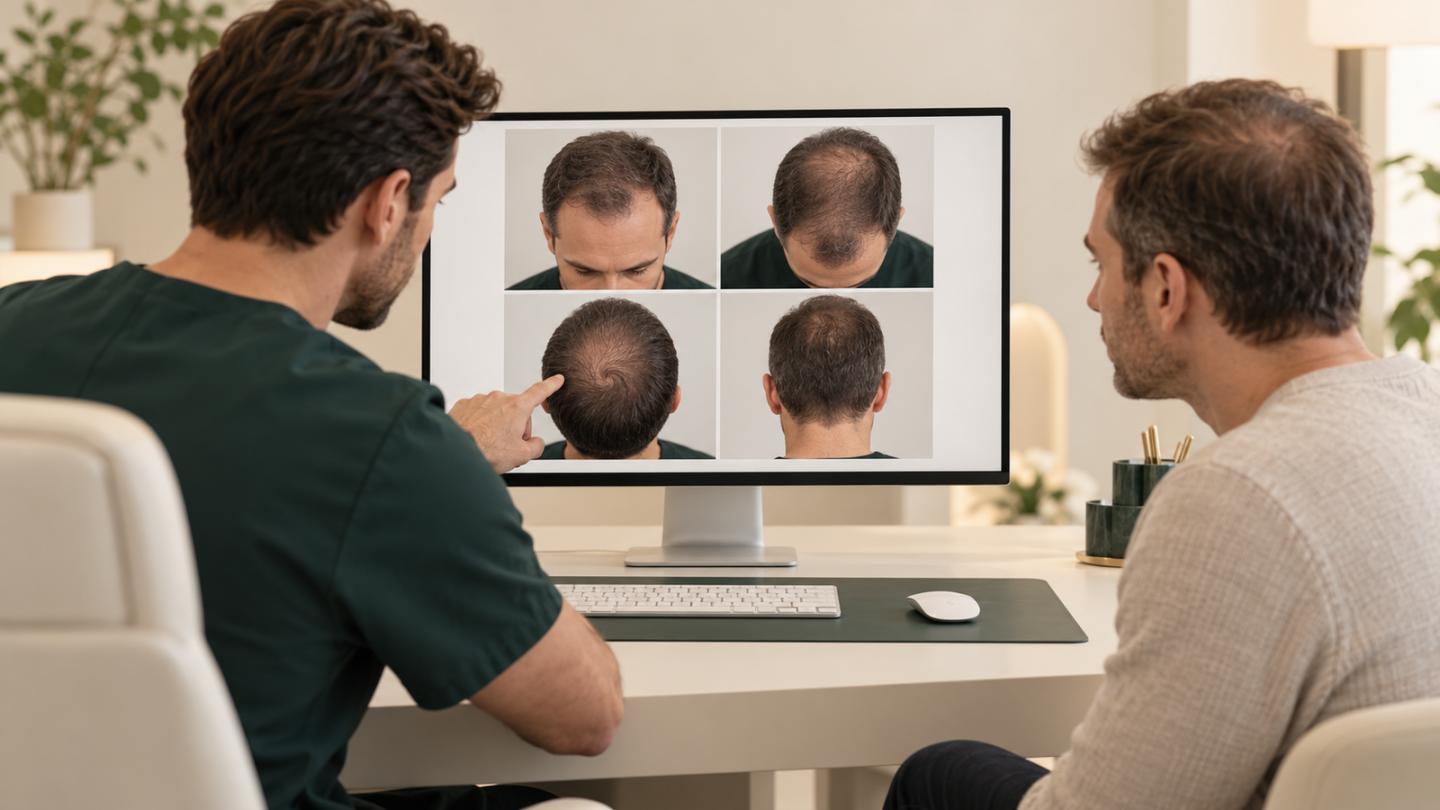
A correction assessment should separate design, growth, distribution, direction, scarring and progressive native loss. It should also ask what outcome bothers you most at normal conversation distance—not only under harsh close-up lighting. Clear priorities help determine whether a limited improvement is worthwhile.
Assess the recipient and donor areas
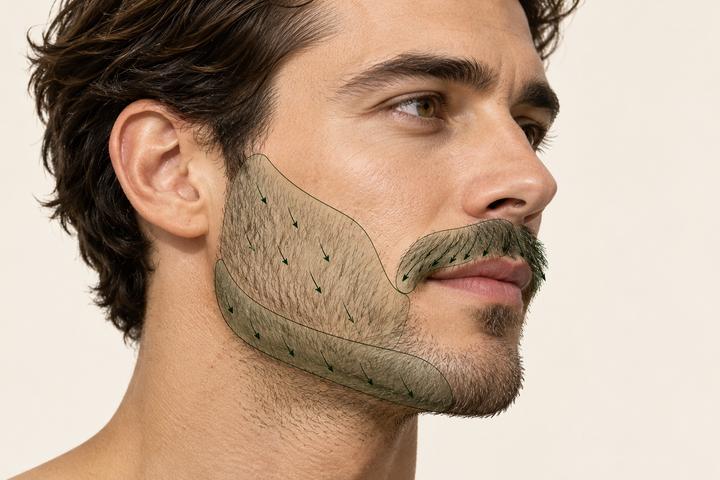
The clinician should examine skin condition, scar tissue, graft direction and the location of prior recipient sites. The donor review considers remaining density, patchiness, scars and possible body or beard donor sources only where clinically appropriate. Weak donor capacity may rule out a dense second session even when the recipient problem is obvious.
Camouflage with carefully placed grafts
Selected cases can be softened by placing finer single-hair grafts ahead of or between coarse units, or by improving transitions around a scar. Camouflage requires enough donor supply and suitable space. It cannot make every low hairline higher, and adding density around poorly directed grafts may not solve the underlying issue.
Removing or reducing unwanted grafts
Very low, pluggy or misdirected grafts may sometimes be extracted, reduced or treated with another removal method before redesign. Removal can leave textural change or require several sessions. Some removed follicles may be reusable, but this cannot be assumed. The plan should explain expected scarring and the sequence of healing.
Donor-area repair has limits
Patchy overharvesting cannot simply be reversed because extracted follicles do not regenerate at the original sites. Options may include redistribution of remaining hair, selective transplantation into visible defects, scar camouflage, styling changes or scalp micropigmentation after appropriate assessment. Preserving what remains is often the highest priority.
A staged plan may be safer
Complex correction can require more than one stage: removal and healing, reassessment, then camouflage or redesign. Staging allows tissue response and donor availability to be reviewed before committing further grafts. Ask what improvement each stage is expected to provide and what happens if the next stage is not advisable.
Records to bring to a correction consultation
- Pre-operative and progress photographs in consistent lighting.
- Procedure date, reported graft count and technique.
- Operative report or extraction and implantation records, if available.
- Medication, complication and aftercare history.
- A short list of the problems you most want addressed.
Questions before choosing a repair
Ask what cannot be corrected, how much donor reserve will remain, which scars may become visible and whether non-surgical camouflage should be considered. Review the donor-planning guide and the natural hairline principles. A good repair plan may be more conservative than the result you originally hoped for.
ROOSTER’s transplant correction service starts with records, photographs and a case-specific assessment. You can request a review, but urgent pain, infection signs or sudden medical symptoms should be directed to an appropriate local clinician.
Sources and further reading
See Correction of the cornrow hair transplant and other common problems, Hair Transplantation: State of the Art, and NHS — hair transplant risks and recovery.
Frequently asked questions
Can every bad hair transplant be fixed?
No. Repair depends on donor supply, scarring, graft direction, skin condition and the specific problem. Some cases can be improved but not fully reversed.
Can a hairline that is too low be raised?
Selected grafts may sometimes be removed or reduced, often over more than one session, but scarring and skin texture must be considered. An in-person assessment is necessary.
How long should I wait before seeking correction?
You can seek an opinion at any time, especially for medical concerns, but cosmetic correction is often planned after adequate growth and tissue maturation unless there is a reason to act earlier.